What You Need to Teach English in Morocco
Morocco’s TEFL market is accessible, but the requirements depend on the type of position and employer. Here’s what you need:
- TEFL certificate
A TEFL, TESOL, or CELTA certificate is required by reputable employers and for the work visa. The better the school, the more likely they are to insist on it. Some smaller, informal language schools may hire without one, but these employers tend to have a reputation for poor working conditions.
- Bachelor’s degree
A degree is required for the work visa. The Moroccan labour ministry requires your employer to demonstrate that you are qualified, and a degree is part of that. Some language centres will hire teachers without a degree, but they will be unable to secure you a work visa, which means you’d be working informally on a tourist visa.
- Teaching experience
Not required for many language centre positions. International schools and universities require 2+ years. Experience is helpful but Morocco is accessible for first-time teachers, particularly those with a TEFL certificate and a willingness to start at a language centre.
- English proficiency
Native speakers are preferred. Non-native speakers with strong fluency and a TEFL certificate can find positions at some language centres.
- French
Not required for teaching, but useful for daily life and for navigating the job market. French remains widely spoken in Morocco, particularly in business and education. Some knowledge of French is an advantage, though not essential.
- Age
There is no widely cited age restriction on the work visa. Morocco is one of the more flexible TEFL markets on this point, and teachers in their 50s and 60s work here. International schools may have their own preferences, but language centres and private tutoring have no practical age barrier.
Choosing the Right TEFL Course for Morocco
A TEFL certificate is both a hiring requirement and a visa requirement in Morocco, so getting the right one is important from both angles. For more about choosing a course, see our 6 Questions to Ask When Choosing a TEFL Course.
- 120 hours minimum
The baseline that credible employers will look for.
- Observed teaching practice
Moroccan students, particularly adults and university-age learners, are motivated and engaged. A course with practical classroom experience prepares you to match that energy from day one.
- Online or in-person
Both are accepted. CELTA courses are available in Casablanca.
For more on the importance of course accreditation, see TEFL Accreditation: What is it and why is it important?
Tip: Your TEFL certificate is also a visa requirement. Schools that don’t ask for one are unlikely to be able to process your work visa, which should tell you something about how they operate.
How Teachers Find Work in Morocco
Morocco’s hiring process is a mix of advance recruitment (for international schools) and on-the-ground job hunting (for language centres and private tutoring). Many positions are not publicly advertised.
On-the-ground job hunting
The most common route for language centre positions. Arrive in Morocco, visit schools in person with your CV, and make direct contact. Casablanca, Rabat, Marrakech, and Fes all have significant numbers of language centres. Many schools fill positions at the last minute, even in the first week of a new semester. Being available in person is a significant advantage. Most sources confirm that teachers who interview in person in Morocco have far better prospects than those applying from abroad.
International and private schools
International schools (American School of Casablanca, American School of Tangier, and others) advertise vacancies on job boards such as TES, as well as on their own websites. These roles are filled before the school year starts and come with stronger packages.
American Language Centers (ALCs)
The American Language Center network operates across Morocco and is one of the most established and reputable English teaching employers. ALCs hire qualified teachers (degree + TEFL/CELTA required) and offer structured contracts with reasonable salaries. ALC positions are a good middle ground between informal language school work and international school employment.
Private tutoring
Private tutoring is common and a good way to supplement income. Pre-university students and business professionals are the main clients. Rates vary by city and clientele.
What employers are looking for
Moroccan language schools hire on a practical basis: can you teach, are you here, and can you start soon? Clear spoken English, a professional appearance, and a willingness to take on a mixed timetable (young learners, adults, exam prep) matter more than a long CV. Schools serving younger students, which is a large part of the market, look for teachers who can keep energy levels up and manage a room. Reliability counts for a lot in a market where teacher turnover is high and schools frequently fill positions at the last minute, sometimes in the first week of a new semester.
The hiring process
At language centres, the process is usually informal. You visit the school, meet the director, and discuss your background and availability. Some may ask you to teach a short trial lesson or provide a teaching video. Schools move quickly when they need someone, and being available to start within days is a real advantage over candidates applying from abroad.
At ALCs, the process is more structured. Expect to submit a formal application including a cover letter, relevant qualifications, references, and sometimes a short teaching video demonstrating your classroom approach. At international schools, recruitment follows standard international timelines with formal interviews – often multiple rounds.
Tip: Dress professionally when visiting schools, even for an informal drop-in. First impressions carry weight in Morocco, and looking the part signals that you take the work seriously.
Tip: Browse our language schools in Morocco to find schools across the country. Be cautious with schools that don’t check qualifications or seem too eager to hire. The quality range in Morocco’s private sector is wide.
Types of Teaching Jobs in Morocco
Language centres
The most common employer. Private language centres in cities across Morocco teach general English, Business English, and exam preparation. Salaries range from approximately MAD 4,600-9,500 per month (approximately $500-$1,000). You can expect around 20-25 teaching hours per week, with most of those falling in the evenings and on weekends. Benefits beyond salary are uncommon at most language centres. Housing is not usually provided, though some offer a small stipend.
A typical language centre schedule involves teaching after school hours and on Saturdays, with classes running from around 4-9pm on weekdays. Your students are a mix of teenagers preparing for university (English is an entry requirement for many Moroccan universities) and adults seeking to improve their career prospects. Exam preparation (IELTS, TOEFL) is a significant part of the market. Class sizes are small to medium (5-15 students). You’ll generally prepare your own lesson plans, though schools provide textbooks and a syllabus. The quality range is wide: established centres like those affiliated with Cambridge or the British Council are professional and well-run, while some smaller independent schools cut corners on materials, pay, and working conditions.
American Language Centers
A step above typical language centres in terms of structure and pay. The ALC network is managed by Amideast and funded by the US State Department, with centres in Casablanca, Rabat, Fes, Marrakech, Agadir, Irbid, Mafraq, and other cities. Salaries of approximately MAD 15,000-19,000 per month (approximately $1,600-$2,000) are reported for qualified teachers, sometimes with a housing stipend. ALCs offer a structured working environment, professional development, and a cultural programme alongside English teaching. Contracts are typically for 11 months with August as a paid holiday. ALCs require a degree and a recognised TEFL qualification (CELTA, TESOL, or equivalent). These are among the best language centre positions in Morocco and worth targeting specifically.
Private and international schools
International schools following American, British, or French curricula offer the best compensation in Morocco. Salaries range from approximately MAD 12,000-20,000+ per month (approximately $1,300-$2,150+), often with benefits including housing, flights, and health insurance. Private Moroccan schools offer a range of packages. A teaching licence, degree, and experience are usually required for international schools.
Universities
University positions require a Master’s degree (often a PhD for senior roles). Salaries range from approximately MAD 12,000-30,000 per month (approximately $1,300-$3,200). Competition is significant for the better positions.
Public schools
Teaching in public schools is possible but less common for foreign teachers. Public school positions are more stable but pay is modest and the bureaucratic process can be slow.
Tip: Many teachers in Morocco combine language centre work with private tutoring to build a viable income. The ALC network is worth targeting specifically if you have the qualifications.
Visas and Work Authorisation
Morocco’s work visa process is employer-driven: your school applies on your behalf, and the approval depends on both your qualifications and the employer’s ability to justify hiring a foreign worker.
Arriving and finding work
Citizens of most Western countries (including the US, UK, Canada, Australia, and most EU nations) can enter Morocco visa-free for 90 days. Most teachers arrive on this basis, use the time to find work, and then begin the work visa process once they have an employer willing to sponsor them. You cannot legally work during this period, though many teachers use it to interview and settle in.
The work visa process
- Secure a job offer from a registered employer
Your school must be a legally registered institution with the capacity to sponsor foreign workers. Not all language centres qualify, which is one reason why the ALCs and international schools are preferred employers.
- Your employer applies to the Ministry of Labour (ANAPEC)
The employer submits a request to hire a foreign worker, demonstrating that the position cannot be filled by a Moroccan national. They must provide your qualifications (degree, TEFL certificate), a copy of your passport, and the employment contract. This step is where having proper credentials matters: without a degree and TEFL certificate, the application will not be approved.
- Work permit approval and contract registration
Once the Ministry of Labour approves the application, the employment contract is registered. This typically takes several weeks, though timescales can be unpredictable.
- Residence card (carte de séjour)
With your approved work permit, you apply for a residence card at your local police prefecture. You’ll need your passport, work contract, proof of accommodation, passport photos, and a medical certificate. The carte de séjour is typically valid for one year and renewable.
The practical reality
Reputable employers (international schools, ALCs, established language centres) process work visas properly and know the system. Smaller language schools often operate informally, paying teachers in cash on tourist visas. This is common but illegal, and it leaves you without legal protections, healthcare access, or the ability to open a bank account. If a school cannot or will not process your work visa, that tells you something important about how they operate.
Tip: The work visa process requires your employer to justify hiring a foreign worker over a Moroccan national. Schools that insist on qualifications are the ones that can actually build that case. The qualification requirements and the visa requirements are directly connected.
Note: Visa regulations can change at short notice. Always check official government sources before making travel or work plans.
What You’ll Earn and What It’s Worth
Morocco uses the Moroccan dirham (MAD), which is a managed currency trading at approximately 9.3-9.4 MAD per US dollar. Note that the dirham is a non-convertible currency: it cannot be exchanged outside Morocco.
Salaries in Morocco are not tax-free. A progressive income tax applies, but the actual amount deducted at typical teaching salaries is modest.
Typical earnings
- Language centres: MAD 4,600-9,500/month ($500-$1,000)
- American Language Centers: MAD 15,000-19,000/month ($1,600-$2,000)
- Private/international schools: MAD 12,000-20,000+/month ($1,300-$2,150+)
- Universities: MAD 12,000-30,000/month ($1,300-$3,200)
Cost of living
Morocco’s cost of living is low, even compared to other affordable TEFL destinations. It is one of the cheapest countries in the region to live comfortably.
- Rent: A one-bedroom apartment in a city centre costs approximately MAD 3,000-7,000 per month ($320-$750), with Casablanca at the higher end. Studios and rooms in less central areas cost MAD 2,000-4,000 ($215-$430). Rabat, Fes, and smaller cities are cheaper than Casablanca and Marrakech. Furnished apartments command a premium.
- Food: A meal at a local restaurant costs approximately MAD 30-60 ($3-$6). Street food is cheaper. Groceries for a single person cost approximately MAD 1,500-2,500 per month ($160-$270). Fresh produce from souqs is excellent and affordable.
- Transport: Morocco has a good rail network connecting major cities. The Casablanca-Rabat commuter train is frequent and affordable. Local buses and taxis are cheap. A “grand taxi” between cities costs MAD 30-100 depending on distance.
- Utilities: Electricity, water, and internet cost approximately MAD 500-1,000 per month ($54-$108).
These figures are drawn from publicly available sources and will vary with your location and spending habits:
Salary and cost of living figures in this guide were last checked in August 2026.
Can you save?
On a language centre salary, you’ll cover your costs but save little. Teachers at ALCs, international schools, or universities, or those who supplement with private tutoring, can save modestly. The draw is the cultural experience and affordable lifestyle, not the savings potential.
When to Apply for Teaching Jobs in Morocco
- Language centres: Hire year-round, with the strongest demand at the start of the academic year in September and a second wave in January. Many centres fill positions at the last minute, even in the first week of a new semester, so arriving a week or two before term starts improves your chances. There is some slowdown during Ramadan and summer (July-August).
- American Language Centers: Recruit for their academic year (September start). Apply directly through the ALC network or Amideast. Positions are competitive, so apply early, ideally by spring.
- International schools: Recruit primarily between January and May for a September start. These positions are advertised on international job boards and filled well in advance.
- Universities: Hire for the academic year, typically advertising positions in spring and summer.
- Private tutoring: Available year-round. Demand peaks around exam periods (January and May/June).
Tip: Arrive in August or early September for the widest range of language centre positions. For international schools or ALCs, start your search 6+ months in advance.
For more advice on preparing applications, see TEFL Interview Questions and How to Answer Them.
Where You Can Live and Teach in Morocco
Casablanca
Morocco’s largest city and economic capital. The most teaching positions, including international schools (the American School of Casablanca is one of the most prestigious in the country), language centres, and corporate English demand driven by the banking and business sectors. Casablanca is modern and commercial, with wide boulevards, art deco architecture from the French colonial period, and the enormous Hassan II Mosque (its minaret is the tallest in the world). The city doesn’t have the tourist charm of Marrakech or Fes, but it’s where Morocco’s economy operates. The Maarif, Gauthier, and Anfa neighbourhoods are popular with expats. Casablanca is the most expensive city in Morocco but still very affordable by European standards. Rents range from MAD 3,000-7,000 for a one-bedroom depending on neighbourhood, with expat-popular areas at the higher end.
Rabat
The political capital. Quieter and more manageable than Casablanca, with a good selection of language centres, some international schools, and government-related English teaching demand. Rabat has a beautiful medina, the Kasbah des Oudaias (a 12th-century fortress overlooking the Atlantic), and a pleasant waterfront. The Agdal and Hay Riad districts are popular with expats. Rents are slightly lower than Casablanca. Rabat is connected to Casablanca by frequent trains (about an hour), making it possible to access both job markets.
Marrakech
The tourist capital and one of the most famous cities in Africa. The medina, Jemaa el-Fnaa square, the Atlas Mountains backdrop, and the vibrant souqs draw millions of visitors. Teaching positions exist at language centres and some private schools. The tourism industry drives demand for English, particularly in the hospitality sector. Living costs are higher than in less touristy cities, and finding long-term accommodation has become more challenging as the short-term rental market (Airbnb) has grown. The modern Gueliz district is where most expats live and work. Marrakech is the most visually striking city in Morocco but not necessarily the best base for teaching due to higher costs and a more seasonal market.
Fes
The cultural and spiritual capital, home to the University of al-Qarawiyyin (founded in 859, often cited as the world’s oldest continuously operating university). Fes has a smaller teaching market than Casablanca but offers deeper cultural immersion. The medina of Fes el Bali is a UNESCO World Heritage site: a labyrinth of 9,000+ lanes, workshops, mosques, and fountains that is one of the most extraordinary urban environments in the world. Teaching here puts you in the heart of traditional Morocco. Rents are low, and the cost of living is among the cheapest in Morocco’s major cities.
Tangier
At the northern tip of Morocco, just across the Strait of Gibraltar from Spain. Tangier has a distinctive atmosphere shaped by its European proximity, international history, and literary associations (Paul Bowles, William Burroughs, and Jack Kerouac all lived here). The city is growing, with new port infrastructure and an improving tech scene. Some international schools and language centres. Easy access to Spain and Europe by ferry, and the high-speed rail link to Casablanca (completed in 2018) has improved domestic connectivity.
Other cities
Agadir (Atlantic coast resort), Meknes, Mohammedia, El Jadida, and other smaller cities also have language centres and occasional school positions. Smaller cities offer lower costs and deeper immersion.
Tip: Casablanca and Rabat have the most positions. Marrakech and Fes offer the most culturally distinctive experience. Morocco’s rail network makes it easy to explore from any base.
Cultural Tips for Teaching in Morocco
- Moroccan hospitality
Moroccans are known for their warmth and generosity. Expect mint tea at every meeting, invitations to meals (especially couscous on Fridays, the traditional family meal), and a genuine interest in getting to know you. This hospitality extends to the workplace and the classroom. Students and their families will welcome you warmly, and colleagues will often go out of their way to help you settle in. Accepting invitations, even when you’re tired after a day of teaching, is how relationships are built here.
- Islamic culture
Morocco is a Muslim country with a moderate, tolerant character. Modest dress is expected, particularly for women and in more traditional cities like Fes. In Ramadan, it is respectful to refrain from eating, drinking, or smoking in public while the fast is in progress, though the atmosphere during Ramadan evenings, when families break fast and the streets come alive, is one of the most memorable cultural experiences Morocco offers. Alcohol is available in licensed venues and shops, particularly in tourist areas and larger cities, but consumption is more discreet than in most European countries.
- Haggling
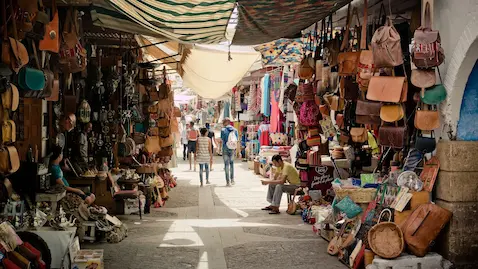
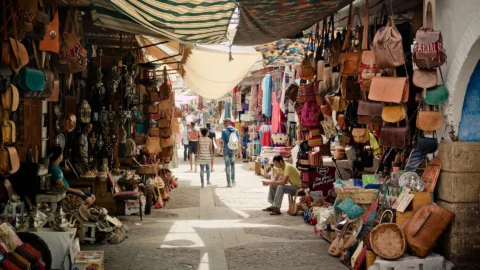
Negotiation is a way of life in Morocco’s souqs and markets. Expect to haggle for everything from groceries to rent to taxi fares. This is not aggressive: it’s social, often enjoyable, and expected. Starting at about half the asking price is a common approach. Learning to haggle in a mix of French, Arabic, and smiles is part of the cultural experience.
- Employer quality varies widely
This is worth emphasising. Morocco has reputable, well-run schools (international schools, ALCs, British Council) and it has language schools that exploit teachers with low pay, unpaid overtime, and poor conditions. The warning signs are familiar: schools that don’t check qualifications, offer you a job within minutes, promise unrealistic salaries, or are vague about contracts and visa arrangements. Research any school before signing. Online teacher forums and groups are helpful. If a school insists on qualifications, asks for a demo lesson, and offers a clear contract, those are positive signs.
- Language landscape
Morocco is multilingual. Arabic (Moroccan Darija), French, and Amazigh (Berber) languages are all widely spoken. Moroccan Arabic is quite different from the Arabic spoken in the Middle East. French is the language of business and government. English is growing but still the third or fourth language for most Moroccans.
- The weather
Varies significantly by region. Coastal cities (Casablanca, Rabat, Tangier) have a Mediterranean climate with mild winters and warm summers. Marrakech and inland cities are hotter and drier, with very hot summers (40°C+). The Atlas Mountains have cold winters with snow.
- Weekend
The weekend is Saturday and Sunday, following the European pattern rather than the Friday-Saturday pattern of most Arab countries.
Career Growth and Opportunities in Morocco
- Build classroom experience
Morocco gives you diverse, hands-on classroom experience: young learners, university-age students, working professionals, exam preparation classes. You’ll develop lesson planning, classroom management, and materials adaptation skills in an environment where resources aren’t always abundant, which builds the kind of adaptability that employers in other markets value highly.
- Move into international schools or ALCs
Starting at a language centre and progressing to an ALC or international school is a realistic career path within Morocco. The jump from MAD 7,000 at a language centre to MAD 15,000+ at an ALC, or MAD 20,000+ at an international school, represents a meaningful change in both income and working conditions. Building a strong reference from your first employer is the key to making this step.
- Use Morocco as a gateway
Experience in Morocco positions you for better-paying markets in the Gulf, or for European markets where familiarity with French-speaking cultures is valued.
- Learn French and Arabic
Morocco is one of the few countries where you can improve both your French and Arabic while teaching English. Both languages add value to your TEFL career and open doors in markets across North Africa, the Middle East, and francophone Europe.
- Pursue advanced qualifications
The low cost of living makes Morocco a practical place to study for a DELTA or MA TESOL by distance learning while working.
For more on career paths, see How to Make a Career Out of TEFL.
Ready to Get Started?
Morocco offers a TEFL experience that combines cultural richness, accessibility, and proximity to Europe. The salaries are modest, but the cost of living is low, the country is stunning, and the demand for English is real and growing. If you want a culturally immersive experience in a fascinating country where a modest salary goes a long way, Morocco is worth a serious look.
Get qualified, start your search, and be prepared to make the most of whatever opportunities you find on the ground.
- Take our quiz to see if teaching in Morocco is a good fit for you.
- Get in touch if you’d like honest advice or have any questions.
We’ve been helping teachers take their next steps in TEFL since 2005, and we’re here to help when you’re ready.
Helpful Links
Sources & References
In addition to the cost of living sources listed above, some information in this guide is based on publicly available data from the following sources:
This guide reflects over twenty years of TEFL industry experience and uses up-to-date market information as of 2026.