

What kinds of books and stories can I use?
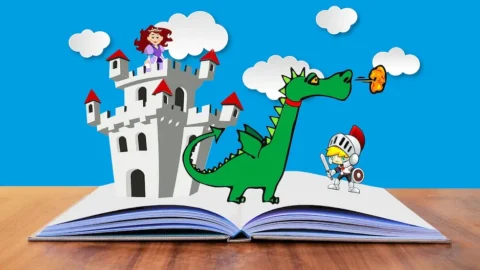
Whenever possible – especially with Kindergarten and Very Young Learners – choose stories with clear illustrations to provide strong visual support. Stories with a lot of repetition, such as Goldilocks and the Three Bears, are particularly effective and naturally encourage children to join in.
Stories that you can complete within one lesson are often the easiest to work with. You can also choose slightly longer books and read a section in each lesson, but these tend to work better with children who already have some understanding of English.
Here are 15 practical ways to use books like these in your classroom, and why they work so well with young learners.
1. Just read!
Don’t underestimate the simple pleasure children get from sitting together and listening to a story being read aloud. It doesn’t matter if they don’t understand every word. They’re still being exposed to repetition of language, intonation patterns, and new vocabulary, especially when the story includes plenty of visuals and repeated phrases.
2. Different Voices
If possible, invite someone else into your classroom to read a story in English. This allows children to hear a different accent and notice how the same story can sound different depending on who is reading it.
One lovely idea is to invite older children from another class to read to the younger ones, either as a group or individually. This helps build confidence in the older children, while the younger ones benefit from the individual attention.
3. Holistic development
When choosing a storybook, think about how it can support children’s development in a holistic way. For example, Goldilocks and the Three Bears lends itself naturally to a wide range of learning areas:
- Literacy, language and communication – children listen, join in with repeated refrains, and build vocabulary and structures.
- Personal, emotional and social development – children explore feelings and empathy (How did the bears feel?).
- Mathematics – the language of size: big, medium, small.
- Expressive arts and design – children create something with purpose, such as bear puppets.
- Understanding the world – discussions about real bears and where they might live.
- Physical development – acting out the story or moving like the characters.
Looking for ready-made Young Learner lesson plans? Have a look at our Resource Packs:
4. Ask questions
Ask children questions about the story to help develop their understanding. Support and prompt as needed. You might ask who the main characters were, what happened in the story, or recreate the story using simple drawings on the board as you go.
You can also ask children to imagine a different ending or talk about their favourite part of the story. Always consider their English level when deciding which questions to ask.
5. Use Props
Props bring stories to life and add an extra layer of fun and engagement. For Goldilocks and the Three Bears, you could use bowls and spoons for the porridge. Choose a few children to act as the bears, or invite the whole class to act out the story together. Imagine how much more memorable the story becomes when the children are part of it.
6. Leave books out
Leave storybooks out for children to “read” or look at independently, for example at the start of a lesson. You’ll often hear children attempting to retell the story to themselves or to each other surprisingly quickly.
7. Make your own books
Invite children to make their own books. Even Very Young Learners or children new to English can do this. You can scribe for them if they can’t write yet.
You can also create a class book together, with each child or pair contributing a page. These can be fiction or non-fiction: ABC books, books about animals, numbers, fruit… the possibilities are endless. One particularly effective idea is a “letter of the alphabet” book, using words and actions linked to the letter currently being learned.
8. Make a concertina book or alphabet book
For variety, make a concertina book on a topic linked to your teaching. Take a long strip of paper (join two sheets if needed) and fold it in half repeatedly to create pages. Children love this format, and it works well for storytelling and sequencing.
9. Story sacks
Story sacks are a wonderful way to bring books to life. A story sack is simply a bag or box filled with items linked to the story.
Puppets for the main characters are easy to make using socks or fabric, with simple faces sewn or stuck on. You can make these yourself or turn it into a classroom activity. Other items don’t need to be perfect – for example, bowls and spoons for Goldilocks can be paper or plastic ones brought from home.
10. Make a display
Create a display based on a story the children have enjoyed. Let them decide what should go on it, using their imagination. This supports creativity and builds confidence.
Displays might include pictures, drawings, or even short quotes and “reviews” from the children themselves.
11. Fiction and non-fiction books
Provide a selection of fiction and non-fiction books in a box or container for children to browse. If possible, keep these in a designated reading or quiet area.

12. Photographs
Take photos of the children and create a class book using simple sentences, such as:
- We can jump!
- We can run!
- We can hop!
Always make sure you have written permission from parents (or via the school) before taking or using any photographs.
Even if children can’t read independently, the book will soon become familiar. They’ll enjoy “reading” it together, learning how books work, and seeing that printed words tell a story. This type of book is often chosen again and again.
13. Bring in books from home
Invite children to bring in a favourite book from home to share with the class. Look at the cover together and talk about what the book might be about, the characters, and the pictures.
Even if the text isn’t in English, the illustrations provide strong support. You can also compare the text with English, noticing similarities and differences.
14. Think outside the box (or book!)
Stories don’t always need to come from books. You can watch stories online, use “Big Books” (enlarged versions designed for shared reading) if you have them, or simply make stories up.
One idea is to draw a story on the board as you tell it. Children especially love it when they appear in the story, either as a class or individually. Try it and see!
15. Make it fun!
If your lessons are engaging and include an element of surprise, children are far more likely to stay focused. Make stories fun and memorable.
For example, when reading about planets or space, invite children to act it out. Become rockets together: 10, 9, 8… blast off! They won’t forget it.
Being active learners is so important for reinforcing concepts and keeping the children engaged in their learning.
Final thoughts
These 15 ideas will help children develop a positive attitude towards reading. Encouraging a love of books is something they’ll carry with them for life – and how wonderful to know that you can play such an important part in that journey.